
When your child is taking medication for ADHD, there are a few simple things you can do to optimise its efficacy — and reduce unwanted side effects. Whether your child is on a stimulant like Ritalin or Concerta, or a non-stimulant like Strattera or Inir, getting the timing, food, and routine right can make a big difference.
Looking for more information on types of ADHD medication, check out our article here.
💊 Timing is Everything
Stimulant meds (like methylphenidate or amphetamines) usually work best when taken in the morning. Giving them too late in the day can make it harder for your child to fall asleep at night.
Try to give the medication around the same time each day. A consistent routine helps keep the medicine levels steady in your child’s body, which means more consistent focus and behaviour during the day.
🍽️ Food Dos and Don’ts
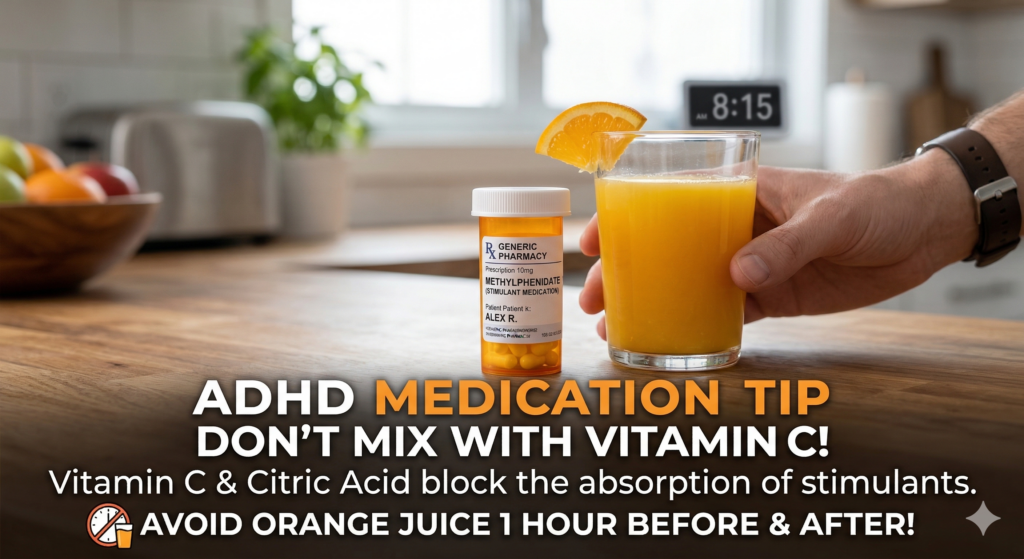
- Don’t mix with orange juice (or anything high in vitamin C): It sounds strange, but vitamin C and citric acid can block the absorption of stimulant medications. Avoid giving juice or citrus fruit about an hour before and after the medicine.
- Eat something first: Many kids lose their appetite on ADHD meds. Giving breakfast before the meds kick in helps keep their energy up. Eating also helps with the absorption of some stimulant medications, so taking them on an empty stomach isn’t always ideal.
- Watch out for high-fat breakfasts: A very fatty meal (like sausages, fried eggs, or buttery toast) can slow down how long-acting stimulants like Vyvanse are absorbed, making them take longer to kick in or feel less effective. Aim for a balanced breakfast with some protein, carbs, and healthy fats instead.
- Go easy on caffeine: If your child drinks tea, cola, or energy drinks, keep an eye on their caffeine intake. Combined with ADHD meds, it can increase anxiety or make them feel jittery.
🔄 What About Non-Stimulant Meds?
Some children do better with non-stimulant medications like:
- Inir (Atomoxetine): This needs to be taken daily and may take a few weeks to build up before you notice a difference. It’s best taken at the same time each day, and some kids find it easier on their stomach when taken with food.
- Dixarit, Monograine, Iopidine (Clonidine): These are sometimes used alongside stimulants or on their own. They can make kids sleepy, so many parents give them in the evening. They’re also used to help with things like anxiety or sleep difficulties.
⚠️ Other Things to Watch Out For
- Other meds: Always let your doctor know about any other medications or supplements your child is taking. Some antidepressants, blood pressure meds, or even over-the-counter cold medicines can interact with ADHD medication.
- Alcohol (for teens): It’s worth knowing that alcohol can increase side effects and reduce how well ADHD meds work. If you have a teenager on medication, make sure they understand this.
🛏️ Managing Side Effects
Common side effects include:
- Trouble sleeping – Try giving the meds earlier in the morning, and stick to a calming bedtime routine.
- Stomach aches or headaches – Offer the meds with food, and encourage your child to drink enough water.
- Appetite loss – Let them eat when they’re hungry, even if that means a bigger dinner or evening snack.
👩⚕️ Keep Checking In
Your child’s needs may change over time, so regular check-ins with your doctor are important. They can help tweak the dose or try a different med if needed. Also, be open about anything else your child is taking, including natural remedies or vitamins — just to be safe.
References
- Verywell Health. Effective Dosing Procedures for Vyvanse.
- Psychology Today. How to Get the Most from Your ADHD Meds.
- Verywell Mind. Non-Stimulant ADHD Medication.
- WebMD. Nonstimulant ADHD Drugs: Uses, Types, Side Effects, and More.
- Healthline. ADHD Medication Side Effects: What to Know.
- SingleCare. Methylphenidate Interactions.
- Verywell Health. ADHD and Alcohol.
- Edu-Psych. Minimizing Side Effects and Using ADHD Medication Effectively.