
Have you ever seen people wearing colour-tinted glasses? How about BONO or Johnny Depp?
This might look like a fashion statement, but to some it’s because they’ve been diagnosed with a perceptual disorder called Irlen Syndrome (Meares-Irlen Syndrome).
But is Irlen Syndrome really a thing?
It’s controversial and has been dispelled by many experts as pseudoscientific, not supported by scientific evidenc1.
However, it is increasing in popularity, with professionals like Educational Psychologists sending children for referrals to specialist optometrists. There is also new research suggesting that tinted lenses improves social cognition in children with ASD2, reduces TBI-related migraines 3 and improves reading performance4.
So, what is Irlen Syndrome?
Irlen Syndrome, also known as Scotopic Sensitivity Syndrome or Meares-Irlen Syndrome, is a perceptual processing disorder that affects the brain’s ability to process visual information.
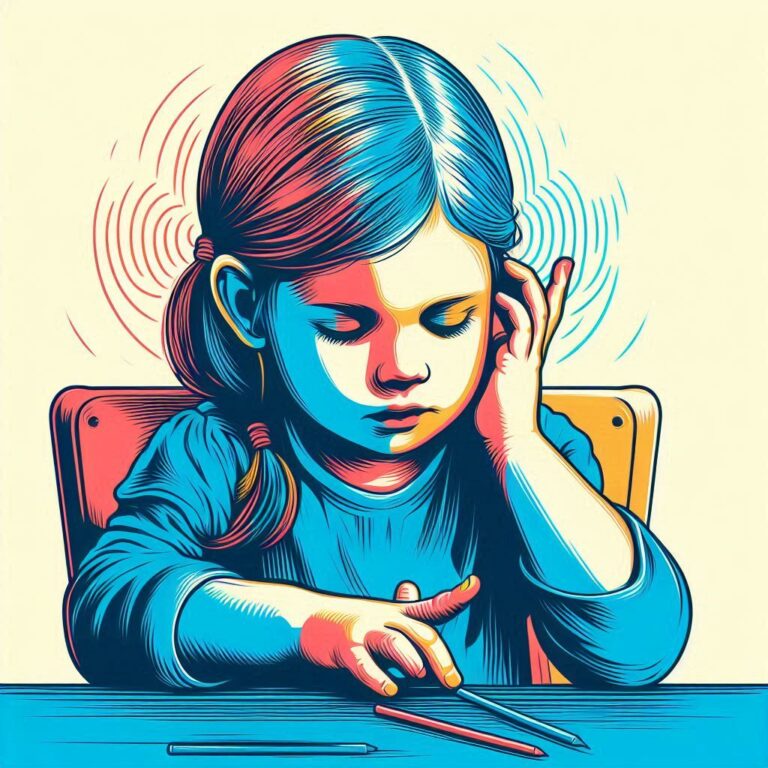
Individuals with Irlen Syndrome may experience difficulties with reading, writing, and other visually-intensive tasks due to sensitivity to certain wavelengths of light.
This sensitivity can result in symptoms such as eye strain, headaches, difficulty concentrating, and distorted or moving text.
Recognizing the Symptoms:
For parents of neurodivergent and ADHD children, identifying the symptoms of Irlen Syndrome can be challenging, as they may overlap with those of ADHD or other learning difficulties. However, some common signs of Irlen Syndrome include:
- Complaints of discomfort or fatigue while reading or doing visually demanding tasks.
- Difficulty tracking or following lines of text.
- Poor depth perception or difficulty with spatial awareness.
- Struggles with writing or copying from the board.
- Avoidance of reading or writing activities.
Interventions and Support:
There are several interventions and strategies that parents can explore to support their child with Irlen Syndrome:
- Coloured Overlays and Filters: Coloured overlays placed over printed materials or coloured lenses worn as glasses can help reduce the visual distortions and discomfort associated with Irlen Syndrome. Experimenting with different colours can help identify the most effective option for your child.
- Environmental Modifications: Creating a comfortable and visually-friendly environment can also help alleviate symptoms. Consider adjusting lighting conditions, minimising glare, and providing ergonomic seating arrangements to support your child’s visual processing needs.
- Assistive Technology: Utilising technology tools such as text-to-speech software or electronic devices with adjustable display settings can make reading and writing more accessible for children with Irlen Syndrome.
- Education and Advocacy: Work with educators to implement accommodations such as extended time for reading assignments or providing printed materials on coloured paper.
We’d love to hear your opinions – have you or your child been diagnosed with Irlen Syndrome? What was the process of diagnosis and have tinted lenses worked?
References:
- https://ranzco.edu/wp-content/uploads/2018/11/Irlen-Syndrome-Position-Statement-May-2018-1.pdf
- https://www.sciencedirect.com/science/article/pii/S0042698920300481
- https://irlen.com/wp-content/uploads/2022/05/Irlen-abstract-Cornell-2019_BRAIN-INJURY-JOURNAL.pdf
- https://irlen.com/wp-content/uploads/2022/05/Irlen-abstract-Cornell-2019_BRAIN-INJURY-JOURNAL.pdf