
For a long time, autistic children have been taught that friendship has a very specific formula.
- Make eye contact.
- Take turns.
- Ask questions.
- Show interest in what the other person is saying.
- Don’t talk too much about your own interests.
- Use the “right” tone of voice.
These are often called “social skills.”
And in many contexts, they can be helpful — especially when it comes to navigating group settings, managing conflict, or staying safe in social environments.
But here’s the question we don’t ask often enough:
Are we teaching skills for connection — or for compliance?
Friendship doesn’t look one way
We tend to measure friendship using neurotypical standards. We look for back-and-forth conversation, shared emotional expression, eye contact, and similar play styles.
But autistic children often connect differently.
They might:
- Sit side-by-side and play without speaking much
- Talk at length about a shared interest
- Prefer parallel play over direct interaction
- Show care through actions rather than words
- Need longer recovery time after social interaction
And here’s the important part: these are not deficits.
They are differences.
Research increasingly supports the idea that autistic people are not “socially broken,” but experience a mismatch in communication styles. This is known as the double empathy problem, introduced by Damian Milton, which highlights that misunderstandings go both ways — not just from autistic to neurotypical people.
So rather than focusing only on changing the autistic child, we need to broaden our understanding of what connection can look like.
The role of social skills — done differently
Social skills are not inherently harmful.
In fact, when taught in the right way, they can be incredibly empowering.
Skills like:
- Understanding boundaries
- Navigating conflict
- Recognising bullying
- Collaborating in group settings
These are life skills, not just “social skills.” The key difference is how they’re taught.
When social skills are framed as:
“This is the only acceptable way to interact”
they can lead to masking, anxiety, and disconnection from self.
But when they are framed as:
“These are tools you can use when they help you”
they become empowering.
The goal is not to replace a child’s natural way of connecting — but to expand their options, especially in situations where communication breakdowns or social risks might occur.
The hidden cost of getting it wrong
When social skills training focuses too heavily on performance — making eye contact, scripting conversations, or suppressing natural behaviours — it can send an unintended message:
“Who you are socially isn’t enough.”
Over time, this can lead to:
- Masking
- Social exhaustion
- Increased anxiety
- Difficulty forming authentic relationships
Many autistic adults describe feeling like they were taught to act out friendships rather than experience them.
That’s not connection — that’s survival.
Parallel play is still connection
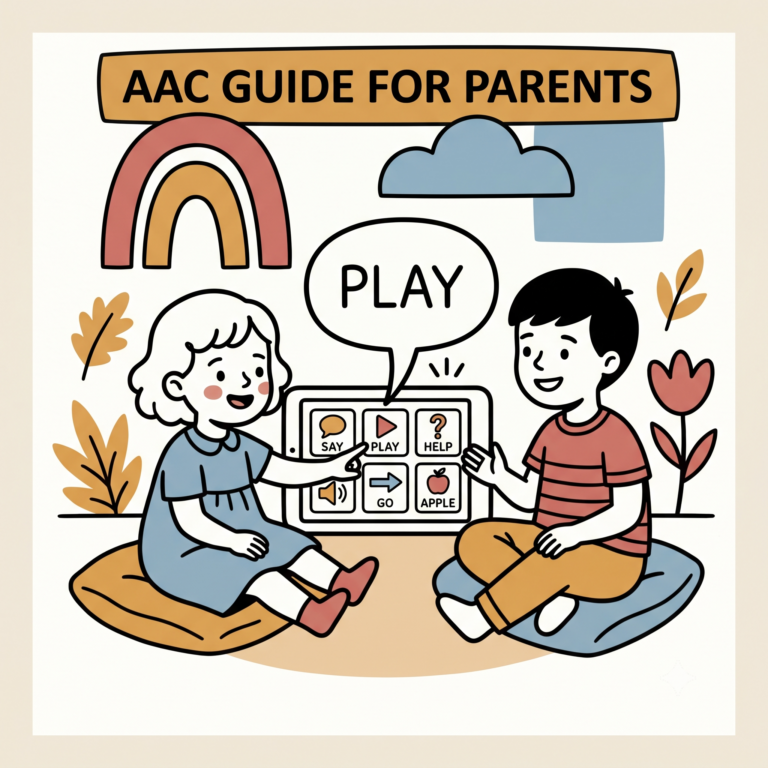
One of the most misunderstood aspects of autistic friendship is parallel play — when children play alongside each other without obvious interaction.
To an outside observer, this can look like disconnection.
But for many autistic children, it’s actually a comfortable and meaningful way to share space.
It’s:
- Low pressure
- Regulating
- Predictable
- Safe
And it often forms the foundation for deeper connection over time. Not all friendship needs to be loud or obvious to be real.
Shared interests are a powerful bridge
Many autistic children connect through shared interests — sometimes intensely.
This might look like:
- Talking at length about a favourite topic
- Wanting to return to the same subject repeatedly
- Struggling to shift topics
Instead of seeing this as something to correct, we can recognise it as a genuine attempt to connect.
Shared interests can be one of the most natural and successful ways for autistic children to build relationships.
From there, we can gently support flexibility:
- Taking turns in conversation
- Noticing others’ interests
- Finding common ground
Not by shutting down their enthusiasm — but by building on it.
Not all friendships are big and busy
We often associate friendship with groups, parties, and constant interaction.
But many autistic children prefer:
- One-on-one relationships
- Shorter, more predictable interactions
- Familiar people
- Calm environments
This doesn’t mean they lack social motivation.
It means they have different social needs.
When we respect those needs, connection becomes more accessible — and more meaningful.
What actually supports connection?
If we shift away from rigid expectations, we can focus on skills that truly support relationships:
1. Boundaries and consent
Helping children understand their own limits — and respect others’.
2. Emotional awareness
Recognising feelings in themselves and others (in ways that make sense to them).
3. Repair and conflict resolution
Learning what to do when something goes wrong socially.
4. Recognising unsafe situations
Including bullying, exclusion, or manipulation.
5. Flexible communication
Supporting multiple ways to express needs — not just verbal or “typical” ones.
These are the kinds of skills that build confidence without erasing identity.
The role of adults: shifting the goal
As parents, educators, and therapists, we’re not just teaching children how to behave.
We’re shaping how they understand themselves in relation to others.
So the goal isn’t:
- “Fit in at all costs”
But rather:
- “Understand yourself, and learn how to navigate the world safely and meaningfully”
This includes helping neurotypical children learn to meet autistic peers halfway — not placing the full responsibility on one child to adapt.
A more balanced view of friendship
Friendship is not a checklist.
It’s not perfect eye contact.
It’s not scripted conversation.
It’s not performing social rules flawlessly.
Friendship is:
- Feeling safe
- Sharing space
- Being accepted
- Having the option to connect in ways that feel right
Autistic children absolutely can and do form meaningful relationships. They don’t need to become someone else to do it.
But they can benefit from learning tools that help them navigate a world that isn’t always designed with them in mind.
And that’s where thoughtful, respectful social skills support can make a real difference.
References
- Damian Milton (2012). The Double Empathy Problem
- National Autistic Society (2023). Social interaction guidance
- Autistica (2024). Research on autistic communication
- American Psychological Association (2022–2024). Neurodiversity and development
- World Health Organization (2023). Neurodevelopmental conditions