Understanding Dyspraxia
A Guide for South African Parents
What Is Dyspraxia?
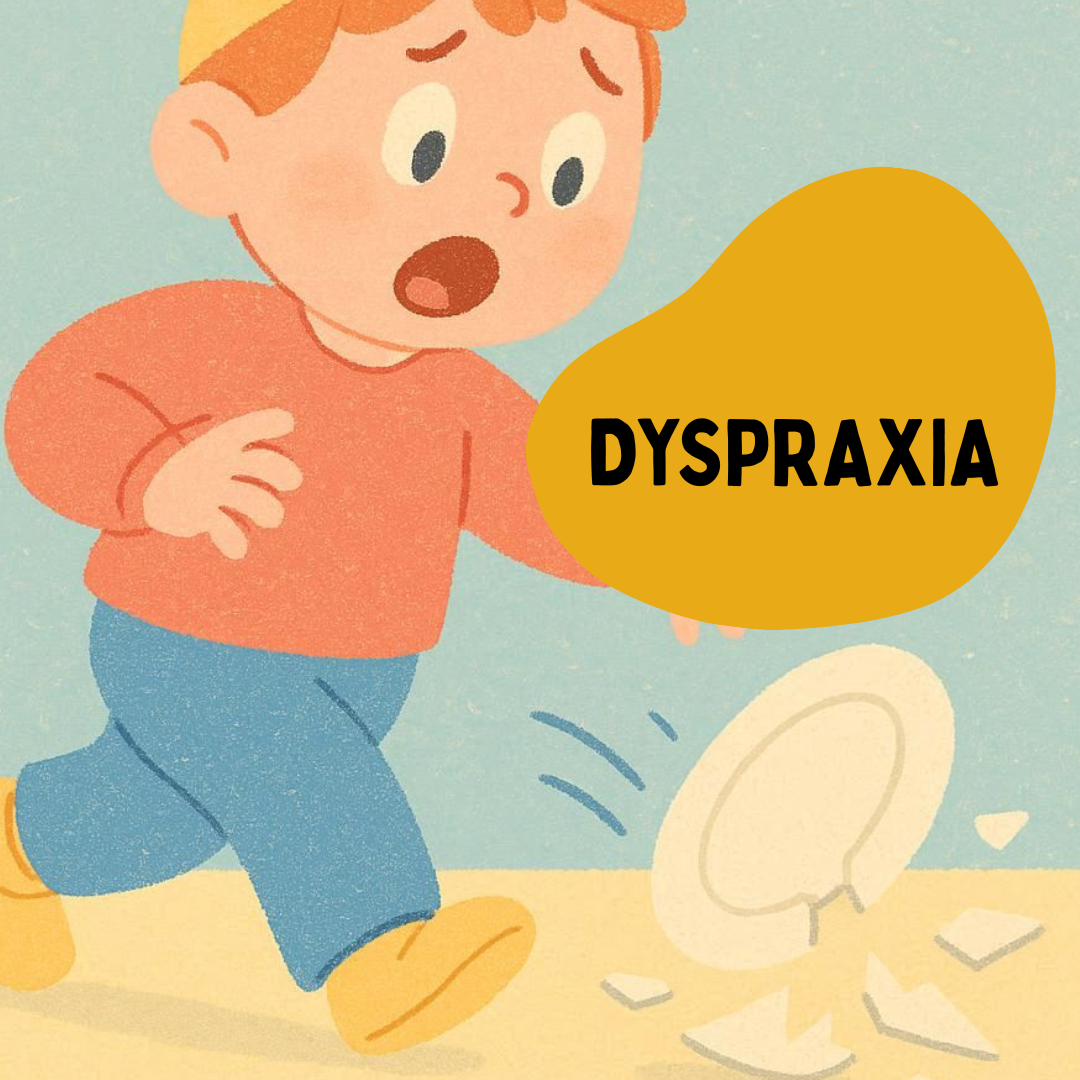
Dyspraxia, also known as Developmental Coordination Disorder (DCD), is a neurodevelopmental condition that affects a child’s ability to coordinate movements. Essentially, there is a disruption in how the brain sends signals to the body —affecting both fine and gross motor skills—even when no significant neurological issues are present. It interferes with tasks such as writing, using cutlery, balancing, and even organising actions to execute a plan. It can also extend into difficulties with attention, working memory, and time management.
How Common Is It?
Dyspraxia is more common than many parents realise:
Globally, dyspraxia affects about 5–6% of school-aged children. More broadly, some studies estimate it may impact up to 15% of learners.
In South Africa, specifically within Foundation Phase (Grade 0–3), teachers have noted it is recognisable—indicating that while the prevalence aligns with global figures, awareness in schools remains critical.
Notably, it’s a lifelong condition—about 50–70% of children with dyspraxia continue to experience challenges into adolescence and adulthood.
Dyspraxia is often under-recognised—many affected children are wrongly thought to be simply clumsy.
How to Identify Dyspraxia in Your Child
The standard Sensory Integration and Praxis Test (SIPT), introduced in South Africa around 2006, is useful but may exclude non-English/Afrikaans speakers—highlighting the need for locally appropriate assessment tools.
Beware of unproven programmes—e.g., the controversial Dore Method, whose effectiveness lacks rigorous validation.
Early signs may include:
- Delayed motor milestones: crawling, walking, dressing, self-feeding.
- Awkward, clumsy movements; frequent falls or bumping into objects.
School-age signs can include:
- Sloppy handwriting; difficulty using scissors or tools.
- Problems catching a ball, riding a bicycle, tying shoelaces.
- Poor spatial awareness; difficulty with organisation, time management, memory.
- Behavioural; Task avoidance, frustration, social interaction difficulties, irritation or aggression
Children may also experience speech delays or challenges, sensory sensitivity, fatigue, and low self-esteem.

How to get a diagnosis
Professionals Involved
- Paediatricians or neurologists – rule out other medical or developmental conditions.
- Occupational therapists (OTs) – central to assessment, focusing on fine and gross motor skills, motor planning, daily functioning, and sensory processing.
- Physiotherapists – assess balance, coordination, and posture.
- Educational psychologists – may assess cognitive ability, learning difficulties, and academic impact.
- Speech and language therapists – where verbal dyspraxia (childhood apraxia of speech) is suspected.
Assessment Tools in South Africa
- The DSM-5 criteria for Developmental Coordination Disorder are generally followed. Diagnosis requires that:
- Motor skills are substantially below what is expected for the child’s age.
- Difficulties interfere with daily living or academic performance.
- Challenges are not explained by intellectual disability, neurological conditions, or vision/hearing problems.
- Commonly used standardised tools:
- Movement Assessment Battery for Children (MABC-2) – widely used internationally and in South Africa to measure motor coordination.
- Bruininks–Oseretsky Test of Motor Proficiency (BOT-2) – assesses fine and gross motor control.
- Sensory Integration and Praxis Test (SIPT)
- Observations are also made in natural environments (home, school, playground) to see how difficulties affect daily life.
In South Africa, dyspraxia is diagnosed by a multidisciplinary team—with occupational therapists playing the lead role. However, challenges remain due to test cultural bias, limited awareness, and unequal access to services.
Effective interventions often include:
- Occupational therapy (OT): focuses on motor skills and self-care tasks.
- Physiotherapy: improves gross motor skills like balance and coordination.
- Additionally, interventions should be family-centred and include children in goal-setting to enhance engagement and outcomes
- A holistic approach is necessary, drawing from international clinical guidelines that encompass psychosocial, academic, and emotional aspects.
Interventions must be early, intensive, and tailored. For verbal dyspraxia, therapy often involves 3–5 sessions per week, with short, consistent sessions (about 30 minutes) using principles of motor learning and multi-sensory input.
What Can Teachers Do?
South African Foundation Phase teachers are well-positioned to recognise early signs but shouldn’t diagnose. Instead, they should:
- Observe fine/gross motor delays (e.g., clumsiness, slow work pace).
- Fine motor support: use of pencil grips, slanted writing boards, typing, adapted scissors.
- Gross motor support: extra time for physical tasks, motor-coordination games, balance activities.
- Organisation aids: visual timetables, chunked instructions, prompts for routine tasks.
- Speech support for those with verbal dyspraxia: multi-sensory prompts (visual, tactile), structured, repetitive practices.
- Recognise emotional responses (e.g., frustration, avoidance, irritability).
- Initiate referrals to healthcare professionals—such as occupational therapists, educational psychologists, speech therapists, or physiotherapists—for proper assessment and intervention.
These accommodations help level the playing field, reduce frustration, and build confidence. Regular communication between teachers, therapists, and parents is vital.
References
- Castellucci G., Developmental Coordination Disorder (Dyspraxia), 2024
- Purcell C. et al., Harnessing real-life experiences… DCD/dyspraxia, 2024
- O’Kelly N.L., Journeying with developmental coordination disorder, African Journal of Disability, 2023
- Winson N.L. & Fourie J.V., Recognising developmental coordination disorder…, 2020
- Van Staden, C., Parents, Educators and Children: Perceptions on Dyspraxia, UFS, 2013
- Gibbs J., Dyspraxia or developmental coordination disorder?, 2007
- International Clinical Practice Recommendations on DCD (Blank et al.), 2019
- Wikipedia: Developmental Coordination Disorder – prevalence and features


Leave a Reply