What Is DCAPS?
If you’re here, you might want to check out our list of neuroaffirming schools in South Africa
DCAPS, or the Differentiated Curriculum and Assessment Policy Statement, is a specialised adaptation of South Africa’s national CAPS curriculum designed specifically for learners with moderate to severe intellectual disabilities (also referred to as SID). It aims to offer an accessible, inclusive, and functional education suited to their unique learning needs
Why Was DCAPS Introduced?
The introduction of DCAPS is grounded in both the Constitution of South Africa (1996), which enshrines every child’s right to quality, non-discriminatory education, and the UN Convention on the Rights of Persons with Disabilities (ratified by SA in 2007). It aligns with the White Paper on the Rights of Persons with Disabilities (2015), emphasising inclusion and equity for learners with disabilities.
Traditional CAPS was not structured for learners requiring high levels of support. DCAPS addresses this gap by offering functional-level learning, improved flexibility, and an emphasis on dignity, self-reliance, and independence through applied competencies — even when learners may not meet standard grade-level outcomes.
What Does DCAPS Cover?
1. Key Focus Areas
- Functional Literacy & Numeracy: Prioritises language and mathematical concepts relevant to daily life, such as reading shopping lists or understanding money, rather than abstract theory.
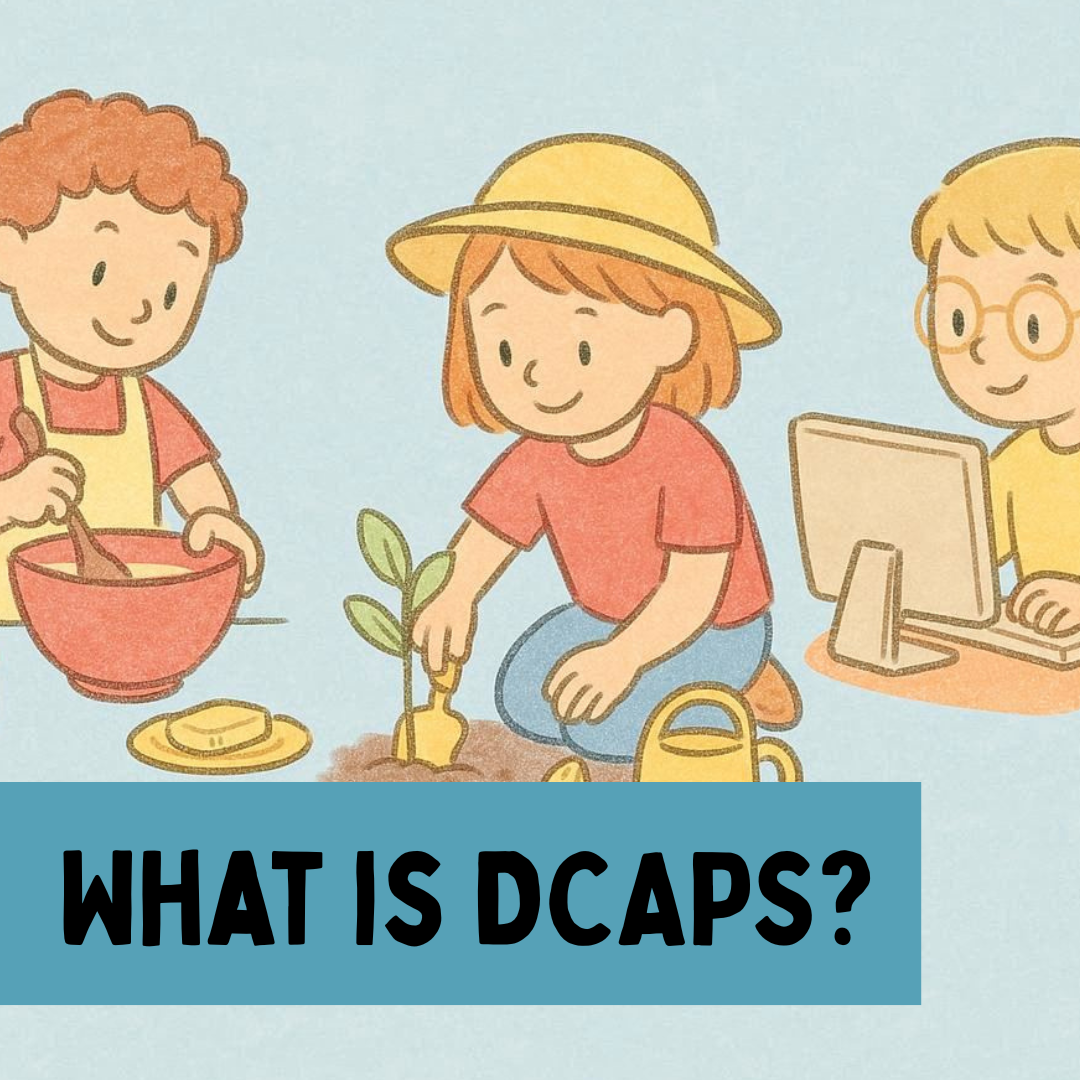
- Life and Vocational Skills: Includes practical, hands-on subjects — for example cooking, gardening, hairdressing, office administration, or healthcare support — depending on the school.
2. Assessment Approach
Standardised tests take a back seat in DCAPS. Instead, educators use continuous, flexible assessments, such as:
- Observational records
- Portfolios
- Checklists
- Rubric-based evaluations
These tools measure individual progress rather than rigid academic achievement.
3. Teacher Guidance & Support
Schools adapting DCAPS often offer specialised training and support materials for educators. However, practical application varies by institution. Some teachers report needing more specific training tailored to learners with autism or intellectual disabilities.
Across schools, DCAPS is tailored to each learner’s abilities, supporting both meaningful engagement and independence.
What Challenges Exist?
Research and field reports highlight several issues:
- Teacher Preparedness: Studies point to insufficient training for educators, especially when working with learners with ASD. Teachers often struggle with the concepts and application of DCAPS.
- Awareness and Clarification: Educators may confuse DCAPS with other frameworks or policies, indicating the need for clearer guidance and resources.
What Parents Need to Know
- DCAPS gives your child relevant, dignified, and inclusive education tailored to their unique abilities.
- It emphasises functional skills, practical life preparedness, and individualised assessment.
- As a parent, you play a vital role — by working closely with educators to set meaningful, achievable learning goals.
- Ask your school about:
- How they adapt DCAPS to your child’s needs
- The types of life and vocational skills they teach
- How progress is measured beyond traditional exams
- What support or training teachers receive to deliver DCAPS effectively
If you’re here, you might want to check out our list of neuroaffirming schools in South Africa
References
Check out for more details:
https://www.scribd.com/document/852939918/CAPS-SID-Section-1-4-Curriculum-2

Leave a Reply