Perception of Neurodivergence in South Africa
“Why Is My Child Like This?”: How South Africans Understand (and Misunderstand) Neurodivergence
In South Africa, conversations around autism and neurodivergence are slowly gaining ground — but how we speak about these conditions still says a lot about how we understand them. And when the language fails, so too does access to support. This article brings together research, parent stories, teacher perspectives, and cultural insights to examine how neurodiversity is perceived — and often misunderstood — across South African communities.
In many South African homes, autism is not just misunderstood—it’s unnamed. It’s a condition met with side-eyes, silence, shame, and, sometimes, supernatural explanations. And yet, amid this confusion, many parents are fighting to give their children the chance to be seen for who they really are: different, not broken.
This article explores how cultural perceptions, stigma, misinformation, and language shape the South African understanding of neurodiversity—particularly autism—and the lived experiences of families.
“You are spoiling him”: Blame and Misconceptions
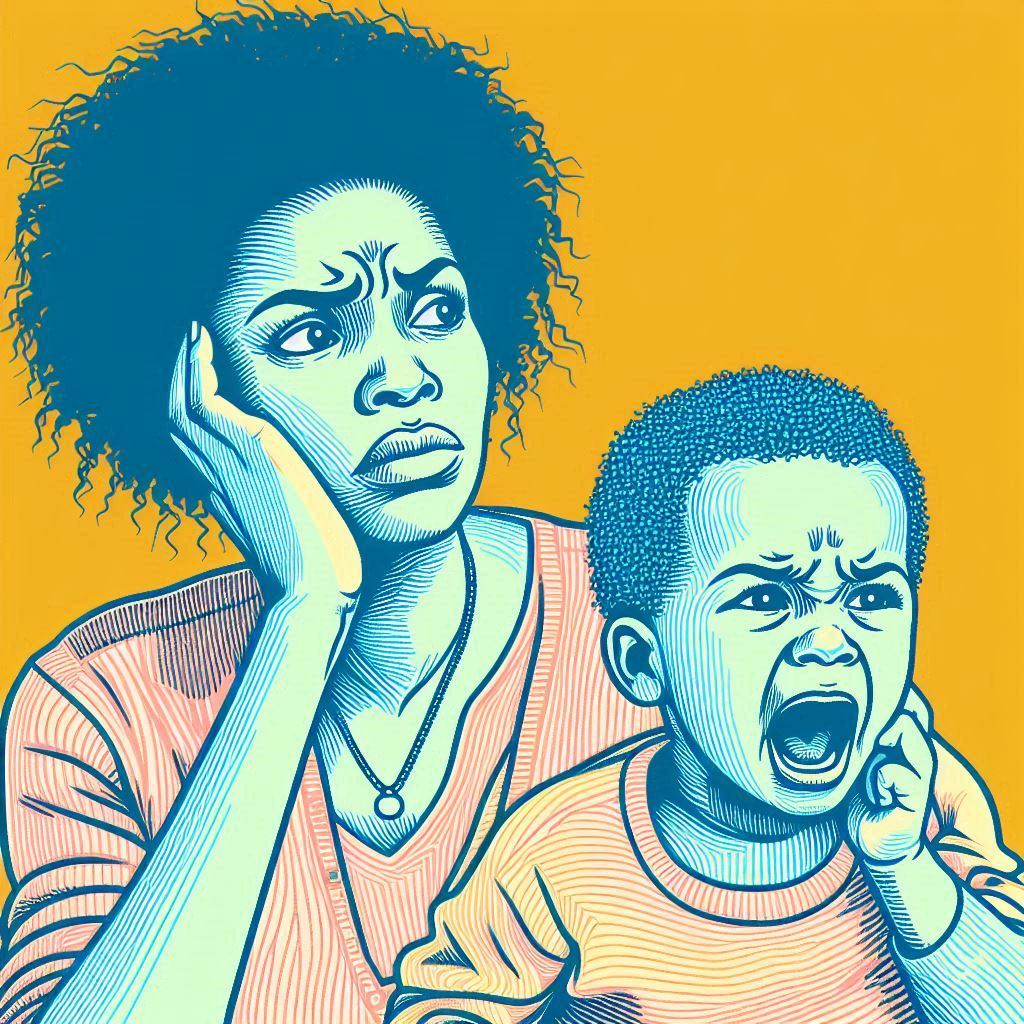
In countless interviews across provinces, mothers speak of being blamed for their child’s “bad behaviour.” Instead of receiving support, they’re often told their parenting is to blame.
“People tell me, ‘He is like this because you don’t discipline him properly.’” (Lentoor, Mdluli, & Maepa, 2023)
In Black African communities, there is a cultural expectation that children should be obedient, quiet, and respectful. A child who repeats phrases, makes strange movements, or melts down in public is seen as “naughty,” not neurologically different. One mother shared that her child was called “makgona,” a derogatory Sepedi term implying incompetence (van der Merwe, 2020).
For many families, the social cost is high. Mothers report being isolated by neighbours, judged by family, and overlooked by health professionals. Some are told their children are possessed. Others are advised to take them to traditional healers or church prophets to “cast out the spirit” (Mpofu & Sefotho, 2023).
“I asked myself why I was having this difficult child”: Grief, Relief, and Resilience
Before diagnosis, many mothers describe a dark and lonely emotional journey. They worry something is “wrong,” but they don’t know what. When the diagnosis finally comes, there’s often a mix of shock and deep relief.
“When my child got the diagnosis, I cried. But not because I was sad—I finally had an answer.”
— A South African mother, Limpopo Province
“Yebo, it was a great relief. I could finally explain it to people. My child was not just being difficult.”(Manono & Clasquin-Johnson, 2023)
Still, even with a diagnosis, stigma doesn’t vanish. Parents say they hesitate to use the term “autism” because the community sees it as synonymous with madness.
“My sister said, ‘Don’t say that word in front of people; they’ll think your child is crazy.’”
This shame can delay diagnosis and intervention for years. One study found that many children in under-resourced communities are only diagnosed after entering school—if at all (Mdluli et al., 2023).
Cultural Beliefs: Between Ancestral Spirits and Western Medicine
In some rural and peri-urban communities, autism is still explained through ancestral or spiritual lenses. Parents may be told their child is a “spirit child” or that their condition is a punishment from ancestors for unresolved family issues. This belief often creates tension between seeking clinical help and adhering to traditional expectations.
“My mother-in-law said I must stop going to the clinic. She said we must go to the mountain and do a cleansing.”
These beliefs aren’t always harmful—some families find comfort in integrating spiritual and medical care—but when families are pressured to abandon therapies, it can limit children’s development and increase caregiver distress (Mpofu & Sefotho, 2023).
Language Gaps: No Words, No Help
In isiZulu, Sesotho, and Xitsonga, there is no direct, respectful word for “autism.” Teachers and caregivers often resort to euphemisms like “not normal,” “special,” or even “crazy.” Without language, there is no framework for understanding. Without understanding, there is little empathy.
“People think I’m making excuses for my child when I say he has autism. They say I must just beat him.”
The absence of terminology extends into schools. A study of foundation-phase teachers found that many had never been trained to recognise or support autistic learners (van der Merwe, 2020). Children who stim or struggle with transitions are often labelled disruptive. One teacher said she thought a child was “possessed” until a specialist explained it was autism.
In Limpopo, a study with Sepedi-speaking teachers revealed that while many had encountered children with autism-like traits, few felt equipped to help.
“I don’t understand this autism thing. No one taught us about it.”
(van der Merwe, 2020)
Some admitted confusing autism with bad behaviour or mental illness, not out of malice, but because of how little training they’d received.
The Forgotten Siblings and Fathers
Siblings often grow up faster than they should. Many take on caregiving roles, struggle with embarrassment, or feel invisible in a household where the autistic child absorbs all attention (Mokoena & Kern, 2022).
Fathers, too, are frequently absent from both caregiving and support spaces. Mothers describe partners who deny the diagnosis, blame the child, or walk away entirely. One mother shared:
“He said, ‘That’s not my child. That child is cursed.’ And he left.”
This abandonment deepens the burden on women, who are already navigating poverty, health system failures, and social stigma.
The Urgency of Awareness and Language Reform
The idea of neurodiversity — that brain differences are normal and valuable — is still not widely understood in South Africa. There is progress, thanks to advocacy groups, occupational therapists, parent networks, and special education experts, but much remains to be done.
To shift the landscape, we need:
- Culturally respectful education: that integrates traditional beliefs with modern science.
- Clear, non-judgmental terminology: that parents, teachers, and communities can use confidently.
- Support for mothers: who often bear the greatest burden of care and stigma.
- Teacher training: that includes emotional regulation strategies, communication tools, and recognition of diverse learning profiles.
In Conclusion
When we don’t have the words, we can’t have the conversation.
Language is more than communication — it shapes identity, access, and support. For many South African families, understanding neurodivergence begins with making sense of it in their own language and cultural context. By listening to lived experiences, challenging harmful assumptions, and building shared vocabulary, we move closer to a society that sees neurodivergent children not as “bewitched,” “difficult,” or “broken,” but simply different — and worthy of understanding.
References
- Lentoor, A. G., Mdluli, T., & Maepa, M. P. (2023). ‘I asked myself why I was having this difficult child’: Care burden experiences of Black African mothers raising a child with autistic spectrum disorder. The Open Public Health Journal, 16. https://openpublichealthjournal.com/VOLUME/16/ELOCATOR/e187494452306234/
- Manono, M. N., & Clasquin-Johnson, M. G. (2023). ‘Yebo, it was a great relief’: How mothers experience their children’s autism diagnoses. African Journal of Disability, 12, a1101. https://ajod.org/index.php/ajod/article/view/1101/2311?utm_source=chatgpt.com
- Mpofu, J., & Sefotho, M. M. (2023). Autism paradigms in a developing country setting: Results and implications of a Zimbabwean study. The Journal for Transdisciplinary Research in Southern Africa, 19(1), a1484. https://www.scielo.org.za/scielo.php?script=sci_arttext&pid=S2226-72202025000100039
- Mokoena, N., & Kern, A. (2022). Experiences of siblings to children with autism spectrum disorder. Frontiers in Psychiatry, 13, 959117. https://www.frontiersin.org/journals/psychiatry/articles/10.3389/fpsyt.2022.959117/full
- Van der Merwe, H. M. (2020). Sepedi-speaking foundation phase teachers’ knowledge of autism. Tydskrif vir Geesteswetenskappe, 60(1), 87–103. https://td-sa.net/index.php/td/article/view/1484/2596


I am a parent of a child living with ASD, please equipped more teachers to assist our kids at schools. Please support NGO that are advocacy for our children. Thanks